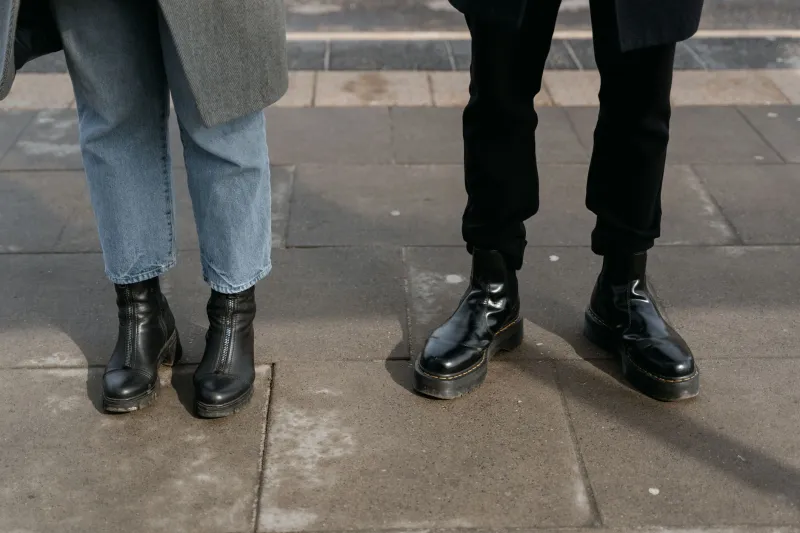
The Extra Layer Effect: Why the Third-Piece Rule Works (Until It Doesn't)
Photo: ArchaiOptix, CC BY-SA 4.0, via Wikimedia Commons
There is a styling idea that floats around every autumn: the third-piece rule. The basic premise is simple. You put on a top and a bottom, then you add one more thing — a jacket, a knit, a scarf, a belt — and suddenly the outfit looks deliberate rather than accidental. I have used it for years without calling it a rule. I suspect most people who dress well do the same. But like any rule, it is only useful if you know when to break it.
What Counts as a Third Piece?
A third piece is not necessarily a blazer. That is where people get stuck. If you think the rule only works with tailoring, you will decide it is not for you and go back to jeans and a jumper. In reality, the third piece can be almost anything that adds a layer of intent: a wool overshirt, a fine-gauge cardigan, a chunky scarf, a barn jacket, a belt, even a structured bag. The point is not formality. The point is finishing.
In a British wardrobe, this is a natural move because our weather demands layers anyway. You are not adding a third piece for the sake of fashion maths. You are adding it because it is 11C and drizzling and you need something between your jumper and your coat. The styling benefit is almost a side effect.
Why It Makes Everyday Clothes Look Intentional
A top and trousers are a fact. A top, trousers and a third piece are a decision. That is the difference. When I add a scarf to a plain black knit and jeans, the outfit stops looking like I got dressed in the dark and starts looking like I chose it. When I add a belt to a midi dress, the same thing happens. The third piece gives the eye somewhere to land. It adds texture, colour or shape, and it makes the whole thing feel considered.
But there is a fine line between considered and fussy. I have worn a third piece before and felt like I was wearing a costume. Usually that happens when the piece is uncomfortable, unnecessary or fighting the rest of the outfit. A heavy scarf with a coat that already has a high collar. A belt over a knit that does not need one. A jacket that makes the shoulders look borrowed. The rule works best when it solves a problem as well as adding polish.
Five Realistic Autumn/Winter 2026 Combinations
These are not fantasy outfits. They are combinations built from pieces most UK wardrobes already contain, or could contain without a full overhaul.
1. Black trousers, grey fine-knit and a wool overshirt
This is my default office outfit. The black trousers are the base, the grey knit is the warmth and the overshirt is the third piece. It works because the overshirt adds structure without feeling like a blazer. Swap the knit for a white T-shirt in early autumn and keep the overshirt. Add ankle boots and you are done.
2. Blue jeans, white tee and a navy barn jacket
The barn jacket is the most useful third piece I own. It is relaxed enough for the school run and smart enough for a casual lunch. With jeans and a white tee it looks intentional. Without the jacket, the same outfit looks like weekend default. That is the rule in action. The jacket is doing the work, not the jeans.
3. Midi skirt, roll-neck and a belted cardigan
A belted cardigan is an underrated third piece because it adds shape without the fuss of a belt. Wear it open over a roll-neck and midi skirt, or button it and cinch the waist. It works best with a skirt that has some volume. If the skirt is already fitted, skip the belt and let the cardigan be the layer.
4. Cord trousers, striped top and a chunky scarf
Cord trousers and a striped top are a good outfit. Add a chunky scarf and they become a cold-weather outfit. The scarf does not need to be expensive. It needs to be big enough to wrap once and warm enough to justify its place. This is the easiest version of the third-piece rule for anyone who does not want to think about jackets.
5. Tailored trousers, black knit and a long coat
A long coat is a third piece that people forget because they think of it as outerwear rather than styling. But in autumn and winter, your coat is often the main thing anyone sees. A long wool coat over tailored trousers and a black knit looks finished. The same outfit without the coat looks like you are on your way to the coat. That is the difference.
When the Rule Is Worth Breaking
I break the third-piece rule all the time. I break it when I am too warm, when I am running late, when I am sensory-avoidant about anything around my neck, and when the outfit already has enough going on. A floral dress with a bold sleeve does not need a scarf. A statement coat does not need a belt. A suit does not need a cardigan. The rule is a tool, not a test.
The other time to break it is when the third piece makes you feel self-conscious. If you are tugging at a jacket or adjusting a belt all day, it is not styling. It is discomfort. The best third piece is the one you forget you are wearing. That is true of most good clothes, really.
The Honest Test
Before you add a third piece, ask yourself one question: does this solve something? Is it keeping me warm, covering a neckline, adding shape, making the outfit feel more like me? If the answer is yes, wear it. If the answer is no and you are only adding it because a styling rule told you to, leave it on the hanger. The goal is not to follow the rule perfectly. The goal is to look in the mirror and feel like you have finished getting dressed. Sometimes that takes three pieces. Sometimes it takes two.