After Daylight: Seven Winter Outfits and the Warm-Light Reality Check
British winter has a second wardrobe problem, and it starts at about 4pm. The outfit that looked crisp in the hallway mirror suddenly has to perform in a pub where the only light source is a brass wall lamp, a half-dead candle and the blue glow of someone checking the football scores. This is not daylight. It is not evening glamour either. It is the four o’clock filter, and it is deeply unkind.
So I ran an experiment. Seven winter outfits, seven days, and a mix of locations: a local pub dinner, after-work drinks, a midweek restaurant table, a Sunday lunch, a basement birthday dinner with lighting that can only be described as romantic if you enjoy not seeing your food, and two ordinary evenings that still ended up in warm indoor rooms. I judged each outfit on four things: colour integrity, fabric behaviour, how it looked on a phone camera, and whether I was still comfortable after three hours sitting down. No professional lighting. No ring light. Just me, a cold-weather wardrobe and a lot of upholstered seating.
The Rules I Actually Followed
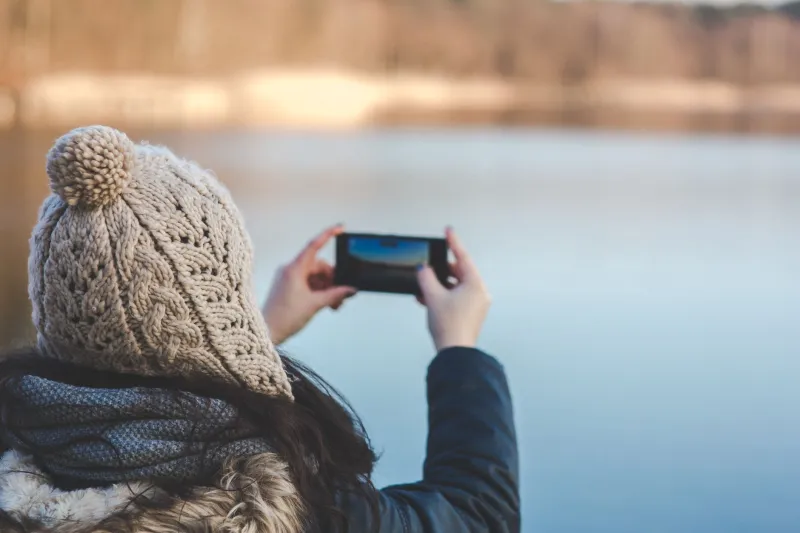
I did not buy anything new for this. The point was to test what already lives in my wardrobe, because most of us are not shopping for a fantasy pub. We are shopping for the reality of a Tuesday in February when the heating is on and your coat is too heavy. Each outfit had to be genuinely cold-weather appropriate: no bare legs unless tights were involved, no flimsy jackets pretending to be coats. I also took a phone photo at the table in every outfit. Not for the grid, just to see what the camera did. That turned out to be the most revealing part.
Colour: What Held Its Nerve
Deep navy, burgundy and forest green were the clear winners. They read as rich under warm bulbs instead of collapsing into one another. A navy wool coat over a burgundy knit looked intentional even when the pub lighting made everything look slightly sepia. Forest green was the surprise: it stayed deep rather than going swampy, as long as the fabric had a bit of weight to it.
Chocolate brown also did well, which feels very 2026 but also very practical. It behaves a bit like black at night but keeps more depth. My camel coat was another strong performer. Under warm light it looked more expensive than it is, which is the sort of small lie I am happy to accept from a coat.
Then there was olive. I love olive in daylight. In pub light it can turn muddy faster than a walk across a wet park. My olive utility jacket looked fine, but an olive knit worn underneath made my face look tired before I had even ordered. Pale pink was another one that lost its nerve. It went slightly washed out and a bit sickly under the warmer bulbs, which is not the energy I want from a birthday dinner.
The Muddy Middle
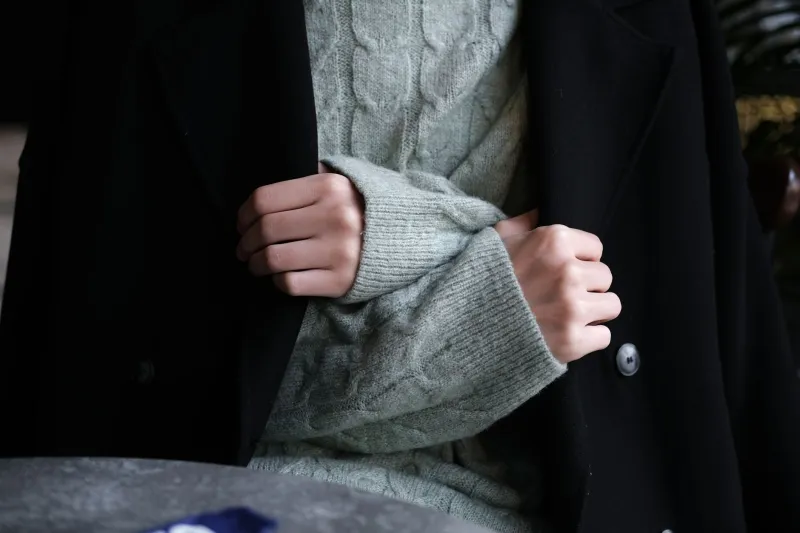
Grey is the tricky one. A good charcoal grey can look expensive and calm, especially in wool. A mid-grey jumper, however, can look like the colour of a cloudy afternoon that has given up. I wore a grey merino crew-neck to after-work drinks and it was fine, but only because I paired it with black trousers and a dark coat. On its own it would have been background noise.
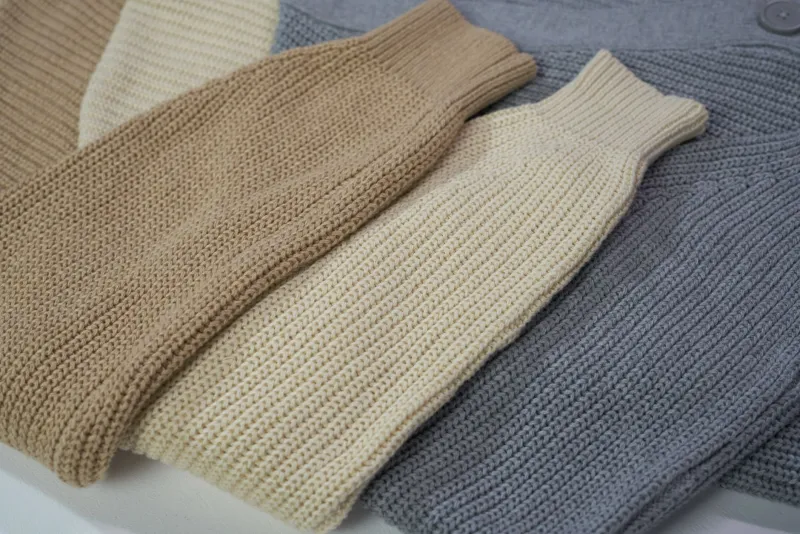
Cream is another one to watch. In daylight it is fresh. In pub light it can turn yellow, especially if the knit is synthetic or has any fuzz. My cream chunky jumper looked lovely in the hallway and slightly like a toasted marshmallow by the time I sat down. Not awful, but not what I had planned. If you want cream after 4pm, go for a cleaner white or a heavier, smoother knit. The fluffier it is, the more it will pick up the room.
Fabric: Shine, Fuzz and the Sitting-Down Test
Wool and wool blends were the most reliable. They absorbed the warm light instead of fighting it. Corduroy also did well, especially in dark brown and navy. It has enough texture to look interesting in low light without turning shiny.
Satin was a surprise. I wore a burgundy satin midi skirt with a black roll-neck to the birthday dinner and it looked genuinely good in the dim room. The sheen caught the little light there was, which made the outfit feel more elevated than it had any right to. The downside arrived after about an hour and a half: creases. Satin does not forgive three hours of sitting on a banquette. I still liked it, but I would not wear it to anywhere I needed to look crisp at the end of the night.
Velvet was the opposite. It swallowed the light in a good way. A dark velvet blazer looked rich and deep, but it also made me very aware of how warm a pub can get. Chunky knits were too much for a crowded room. I spent one evening with my sleeves pushed up and my hair off my neck, which is not the look I had planned. Synthetic fuzz was the worst offender: it caught the light and made the whole outfit look slightly dusty. If a jumper looks fluffy in daylight, it will look fuzzy in a pub. That is not a scientific finding, but it is true.
Phone Camera Reality
The phone camera told the truth in a way the mirror did not. Warm indoor lighting made everything more orange, which meant navy photographed almost black and burgundy looked stronger than it did in real life. Cream went bright and slightly blown out. Black lost detail unless there was a texture difference between the pieces. A black knit, black trousers and black boots photographed as one dark shape, which is fine if that is the intention and less fine if you wanted to look like you had made an effort.
The best phone photos came from outfits with one clear colour and one clear texture. Burgundy satin with a black roll-neck was good. Navy wool with a grey knit was good. All-black with a leather belt was good because the belt gave the camera something to catch. The worst was a tonal outfit with no texture variation. It looked like a smudge. Not a disastrous smudge, but a smudge.
Three Hours Later
This is where winter outfits really separate. After three hours sitting down, waistbands matter more than colour. My high-waisted wool trousers were fine for the first hour and less fine by the third. The satin skirt slid around and needed adjusting every time I stood up. The chunky knit was too warm in a busy room. The camel coat was perfect outside and a nuisance inside because there was nowhere to put it. The black trousers with a bit of stretch were the quiet hero of the week.
Boots were their own test. Anything with a heel was fine for the walk there and a bad idea for the walk home. A flat leather ankle boot with a proper sole was the only pair I wore twice. The pub chair with a nail sticking out of it did not help, but that is not the boot’s fault.
The After-4pm Buying Checklist
Before you buy another winter piece, try this:
- Look at it under a warm bulb, not just the shop’s white ceiling lights. If the shop has a lamp, stand near it.
- Ask whether the colour goes rich or muddy. Deep navy, burgundy, forest green, chocolate brown and charcoal are safer bets than olive, pale pink and creamy yellow-tones.
- Check the fuzz factor. If it already looks fluffy on the rail, it will look dusty in a pub.
- Sit down in the changing room for at least three minutes. If the waistband digs in while you are standing, it will be unbearable after a starter and a main.
- Take a phone photo in warm indoor light if you can. If it photographs as a dark shape with no texture, add a belt, a different knit or a scarf.
- Choose one texture to do the work. Wool, corduroy, velvet or a low sheen satin will look better than three flat fabrics in similar colours.
- Think about heat. A pub is not a cold street. If the outfit only works with the coat on, it is not an outfit, it is a coat.
The lesson was not that I need a whole new winter wardrobe. It was that after 4pm, colour and texture do most of the heavy lifting. Buy for the room you will actually be sitting in, not the daylight you left the house in. That is the test I will be using from now on, and it is already saving me from a few very expensive mistakes.