The Basket Never Lies: Four Weeks of Laundry and the Wardrobe Truth
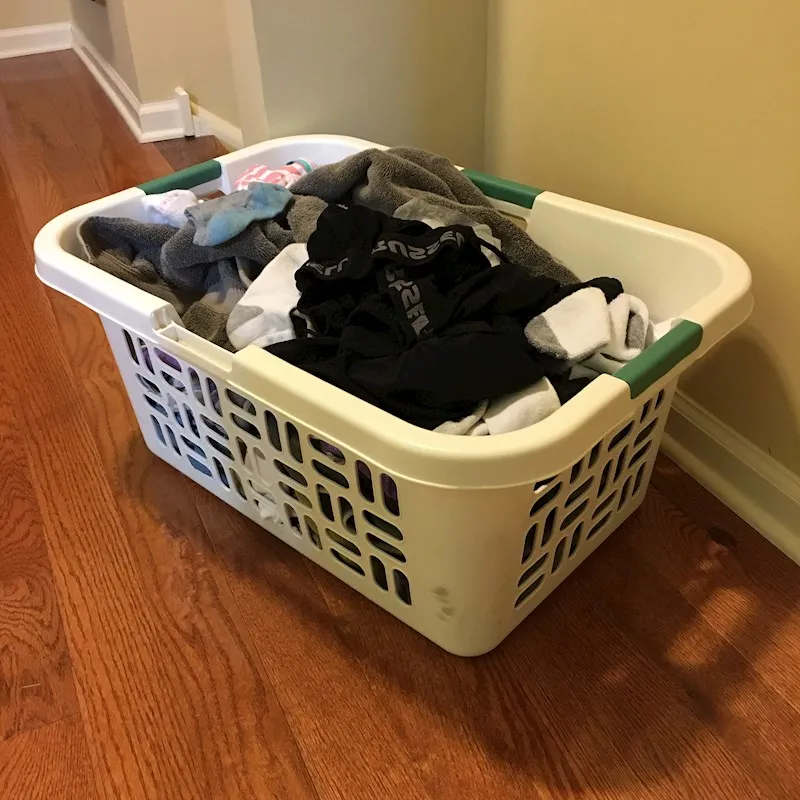
Photo: Dean DiSalvo, CC BY-SA 2.0, via Wikimedia Commons
There is a particular kind of optimism in a wardrobe. It is the optimism of the dress you bought for a wedding that has not happened yet, the trousers that will definitely work once you find the right top, the jacket that is too nice for the school run but too casual for anything else. My wardrobe is full of this future self. My laundry basket, on the other hand, is a record of the present one. It does not care about my intentions. It only knows what actually made it into the wash.
So for four weeks this autumn I kept a tally sheet next to the basket. Every time I did a wash, I wrote down what went in. Not a full inventory of my wardrobe, just the things that were dirty enough to need cleaning. I added a small note beside each item: worn out, worn at home, tried on, or rewashed unworn. That last category turned out to be the most revealing of all.
The method, such as it was
I am not a spreadsheet person by nature. My system was a notebook, a biro and a rule that I would not tidy the list up afterwards. If I wore something twice before washing it, it got one mark. If I washed something because it had been sitting in a pile and I could not remember whether it was clean, it got a mark and a small cross. The cross meant: this item is causing more admin than it is giving me joy.
You can copy this easily. Keep a piece of paper by the washing machine or the basket. For one month, note each item as it goes into the wash. Add a word about the context: work, weekend, home, gym, going out, whatever fits. At the end of the month, count the marks. Do not judge yourself while you are doing it. The point is not to prove you are a bad person because you own eleven going-out tops and wear three of them. The point is to see the gap between the wardrobe you have and the life you are actually living.
What the basket knew
By the end of week two, a pattern was obvious. The same small group of clothes was doing almost all the work. Dark jeans, two plain knitwear pieces, a couple of long-sleeved tops, one useful jacket, a pair of boots and the same black trousers I have written about before. These were not necessarily my favourite things in the wardrobe. They were simply the things that fit the weather, the walk to the station, the office, the supermarket and the general business of being a person in Britain in November.
The fantasy wardrobe was much more interesting. It contained the statement coat that needed a special occasion, the silk skirt that required tights I did not own, the crisp white shirt that looked great in theory and terrified me in practice, and a few dresses that had never quite found their moment. Some of them had been washed once after sitting in a pile, which is not the same as being worn. That is the quiet lie of decluttering: we sometimes wash things to make them feel used. A quick freshen-up in the machine can feel like progress, but it is not the same as wearing something out into the world and finding out whether it works.
The re-wash pile
The clothes that only ever got washed after sitting unworn were the most interesting group. These were not dirty. They were indecisive. They went from hanger to chair to basket to wash to hanger again, never quite making it out of the house. A linen blend dress that creased if I looked at it. A pale cardigan that was lovely but slightly too short. A pair of trousers that fitted well but needed shoes I never wore. They were not bad clothes. They were clothes that required a decision I had not made.
I started to think of the re-wash pile as the wardrobe's version of admin. Every item in it was asking me to do something: find the right underlayer, buy the right shoe, admit that the colour was not for me, accept that the fit was nearly right but not quite. The laundry basket was not just showing me what I wore. It was showing me what I was avoiding.
Cost per wear, honestly
Cost per wear is one of those phrases that can make a wardrobe sound like a business. I like it because it is practical, but I do not think it should be used to justify every expensive purchase. A £120 coat worn ninety times is £1.33 a wear. A £35 top worn twice is £17.50 a wear. That is useful information. It is not a personality test.
The basket audit gave me a better version of the calculation. It showed me which pieces were earning their space in real time, not in theory. The black trousers were probably the best value item I owned. The statement coat was not, even though I liked it. The useful jacket was worth more than its price tag suggested. The pale cardigan was costing me in something less measurable: the small irritation of moving it from chair to basket to chair again.
What I did about it
I did not do a dramatic clear-out. I am suspicious of the idea that a wardrobe should be reduced to a capsule of thirty perfect pieces by Sunday evening. Some people find that liberating; I find it a bit boring. What I did instead was make a maybe box. Anything that had been rewashed unworn, or had not been worn for a full season, went into the box. Not the bin, not the charity shop, just the box. If I needed it, I would know where it was. If I did not open the box in six weeks, I would let it go.
The box was surprisingly small. Most of my wardrobe was either genuinely useful or genuinely wanted. The problem was a small cluster of almosts: almost right, almost the right occasion, almost the right version of me. Those are the clothes that take up the most mental space. They are also the ones that make a full wardrobe feel like it has nothing in it.
The third column
The most useful thing I wrote in the notebook was not the item name. It was the context. Work clothes got washed often and earned their place. Weekend clothes got washed less but felt more like me. Home clothes were the ones I reached for without thinking. The clothes I only wore when I was trying to be someone slightly different were the ones that ended up in the re-wash pile.
That is the real audit: not just what you wash, but what you are doing when you wear it. If a piece only works for a version of your life that does not exist yet, that is not necessarily a reason to throw it out. But it is a reason to stop pretending it is part of your everyday wardrobe. Put it in the maybe box. Give it a season. Or give it to someone whose actual life it fits.
The laundry basket is not glamorous. It is not aesthetic. But it is honest. It knows what you actually wear, and after four weeks it will tell you, whether you want to hear it or not.